Electric strings shape your tone more than most players expect. The metal, the winding and the gauge all change how bright, warm or punchy your guitar sounds and how easily it bends. These are proven sets that cover most styles. Check current listings for prices and exact versions.
Quick guide to materials
- Nickel-plated steel: the modern standard. Bright with good output.
- Pure nickel: warmer and smoother, with a vintage character.
- Coated: longer life, slightly smoother feel.
- Flatwound: very smooth to the touch, with a mellow, jazzy tone.
Our picks
Ernie Ball Slinky Nickel Wound
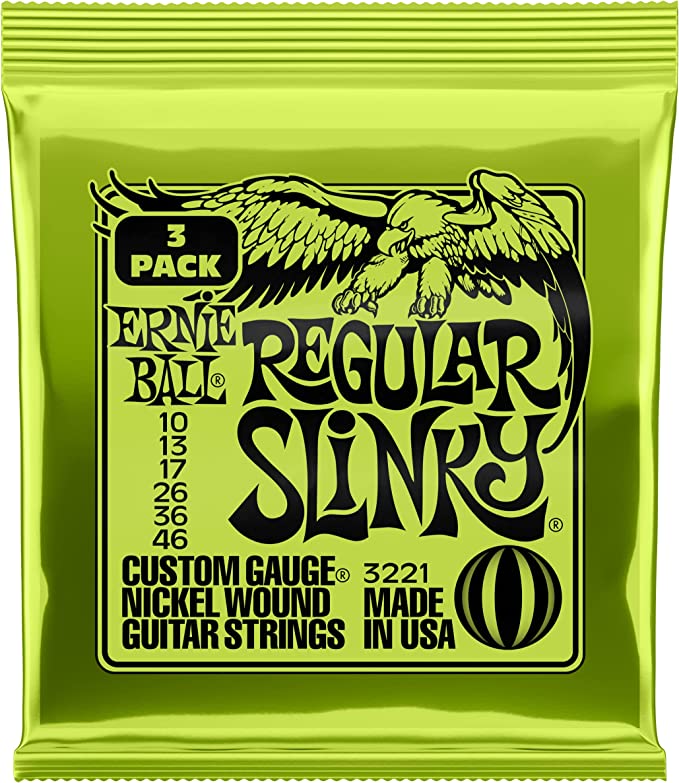 The Regular Slinky (10–46) and Super Slinky (9–42) are among the most-played strings in the world. Balanced, bright and affordable. Best for: almost everyone.
D'Addario XL Nickel Wound
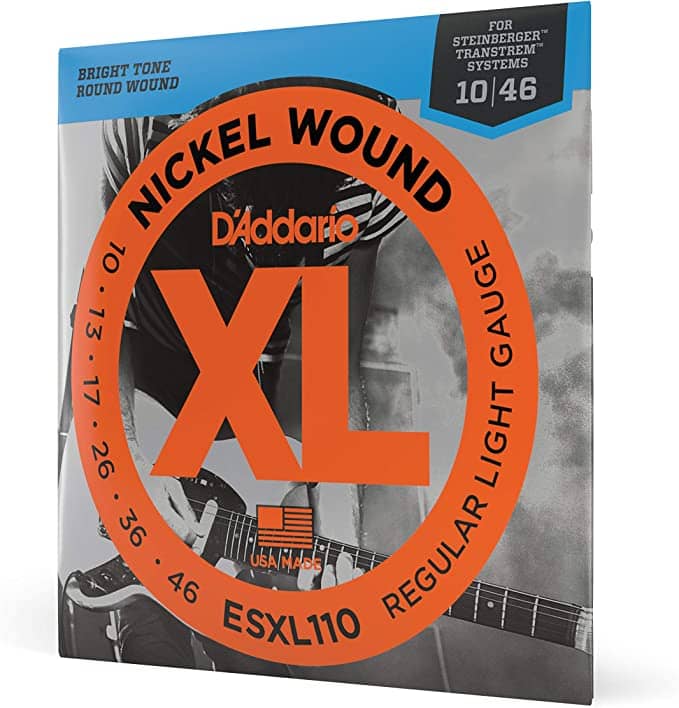 D'Addario's long-running EXL sets are consistent from pack to pack, with a bright, clear tone. Best for: a dependable everyday set.
Elixir Optiweb / Nanoweb Nickel
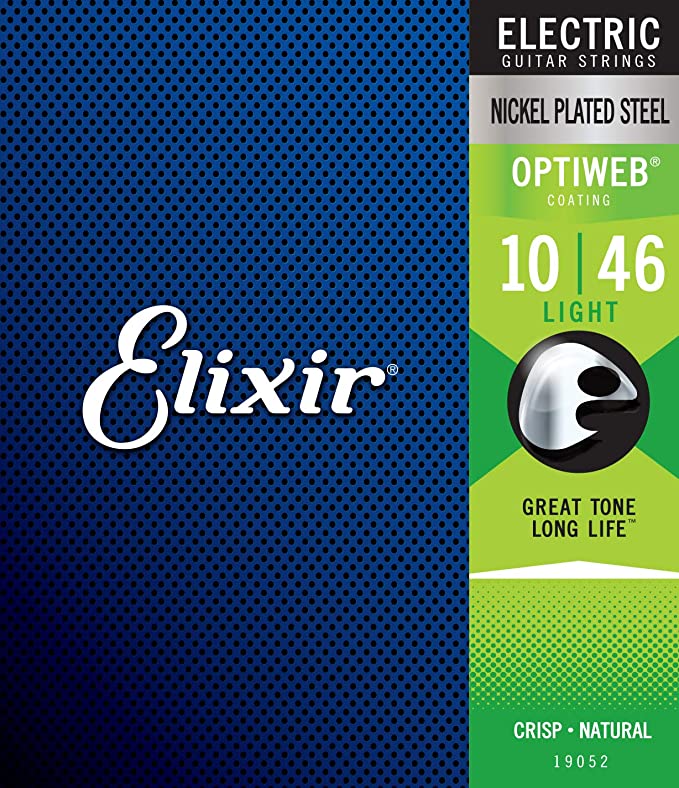 Coated nickel strings that last much longer than uncoated sets. Optiweb feels the closest to bare strings. Best for: players who hate restringing. See coated vs. uncoated strings.
Rotosound Nickel
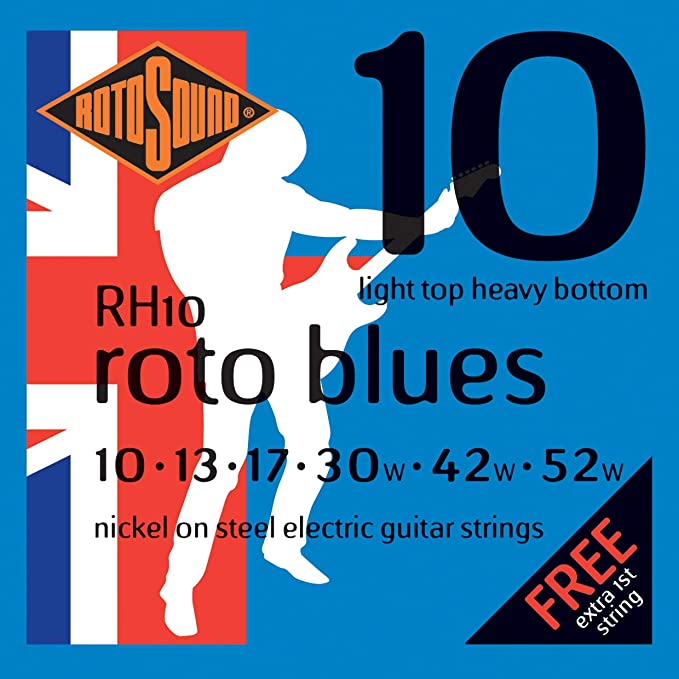 A British classic with a bright, aggressive voice and a long rock history. Best for: classic rock tones.
Fender Pure Nickel
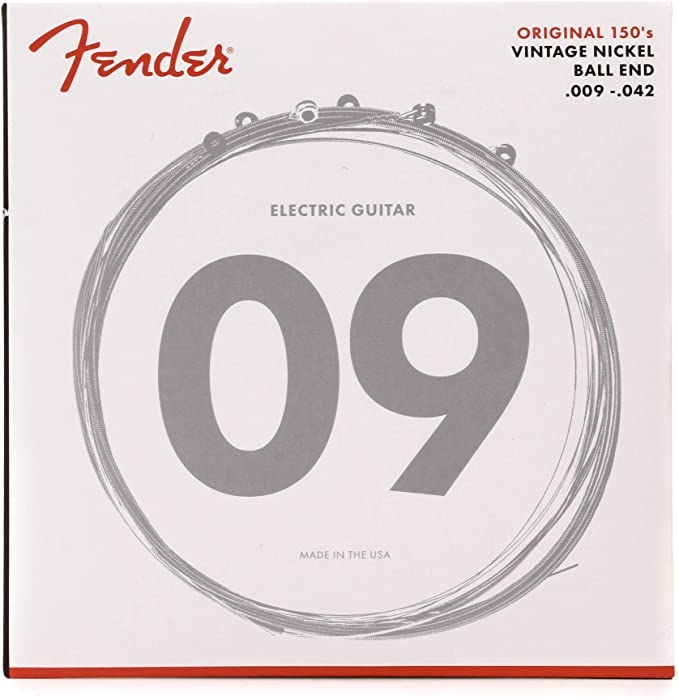 Pure nickel gives a warmer, rounder tone that suits vintage-style single-coil guitars. Best for: blues and vintage tones.
Gibson Flatwound
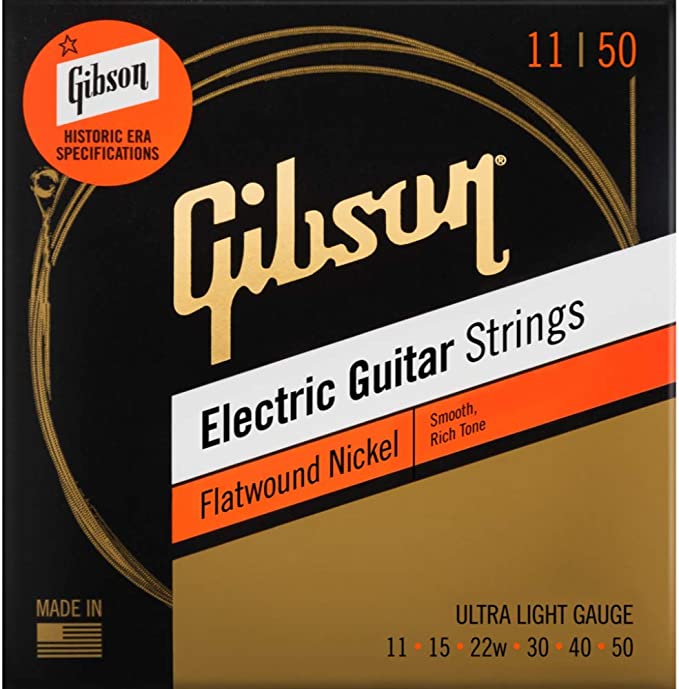 Smooth, quiet under the fingers and mellow in tone. Best for: jazz, archtops and players who want no finger noise.
Dunlop Heavy Core
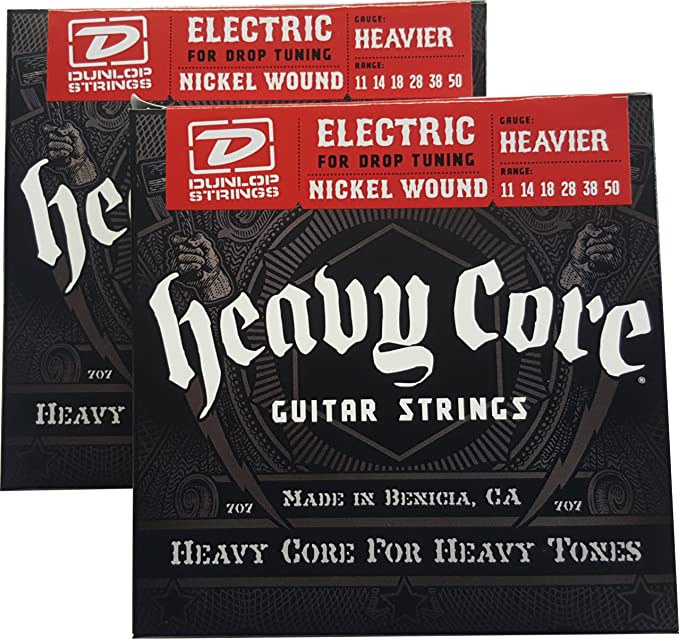 Heavier gauges with extra tension for drop tunings, so low strings stay tight and focused. Best for: metal and down-tuned rock.
Choosing your gauge
- 9–42: easiest bends, slightly thinner sound
- 10–46: the all-rounder
- 11–48 or heavier: fuller tone, better for drop tunings
Read more in how to choose string gauge. If you change gauge a lot, your guitar may need a quick setup.